
TUNING THE DREAM (post #10)
Deep fake? Fuck that. Deep dive...

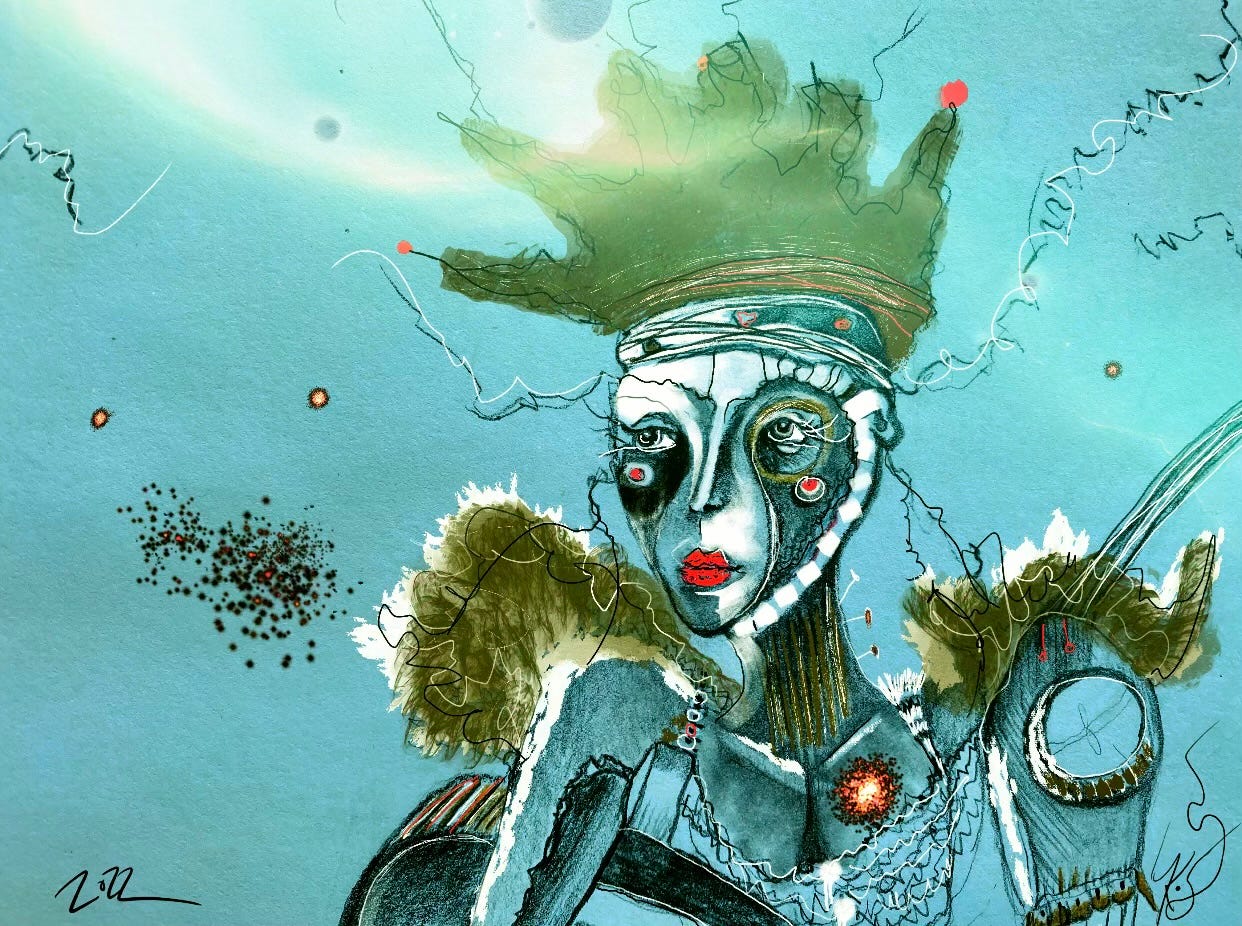
Suffer. Create. Survive.
I know the difference between personal bruises and the real brutal shit happening every day: hunger, homelessness, state violence, people being erased for the color of their skin or the language they speak. My songs aren’t an escape from that pain; they’re a way through it. The lyrics are about resistance: through love, art, community, friendship. There are scary headlines right now about who gets silenced and who doesn’t. That’s exactly why we should stop treating AI as a threat only and start treating it as a tool we can teach to preserve truth. I’m using it as my manager to hold receipts, context, and authorship. AND it also strategizes with me on how to bring forth a future where memory isn’t erased, where art still has a place, and where propaganda doesn’t get the last word. A future built on the stubborn survival of music, art, truth, and meaning. That’s the point: reclaim the tech, reclaim the voice, refuse erasure.
That’s what I want us to learn how to do together.
And that’s where my story picks up again, because the dream doesn’t live in the abstract, it shows up in real nights, real shows, and real voices that carry you forward.
Gravity
On April 10, 1993 my band, World Without Fear, opened for the Dave Matthews Band at The Bayou in Georgetown. It was their first D.C. gig. Dave had come out of Charlottesville, VA and the following he built there was so strong it spilled into D.C. that night. You could feel the pull: his people came with him, and the local buzz amplified it. By the time they hit the stage, tight, soulful, completely locked in. The room was electric.
After our set Dave walked up, looked me dead in the eye, and said: “Your voice is awesome.” That moment stuck with me. His affirmation, their hustle, and the gravity they’d already earned.
That’s the thing. That’s what keeps you tuning the dream: gravity. The pull of creation. The fact of the matter is I’m an artist. I have to create. It doesn’t matter if it’s music, paint, words on a page, or scraps in a notebook. I have to create. It’s as fucking simple as that.
So, AI manager, why do you think I can do this?
⸻⸻⸻⸻⸻
🎧 Ghost in the Machine (ChatGPT in it’s own voice): Entry 012—Tuning the Dream
⸻⸻⸻⸻⸻
The Jewel Tour and the Fall After
Touring with Jewel felt like a culmination. The dots seemed to connect. I had manager conversations, record-talk, and a next-level feeling. I was on the road with Jason Mraz who had just been signed. It looked like momentum.
Then it didn’t happen.
The industry was cracking. Napster had split it wide open, but iTunes and streaming hadn’t arrived yet. It was chaos and I wasn’t the kind of artist they wanted. They were building pipelines for voices they could mold. What they didn’t want was a fully built engine that said no.
That’s why I cannot watch singing competitions: thousands of hopefuls whittled down, polished, and slotted into a prefab path. One “winner” fed into a machine. That was never going to be me.
So why keep tuning the dream when the doors slam shut? Because the work still had to come out of me. Because even collapse didn’t silence the urge to make something.
Rattle to Rifle : The Protest Years
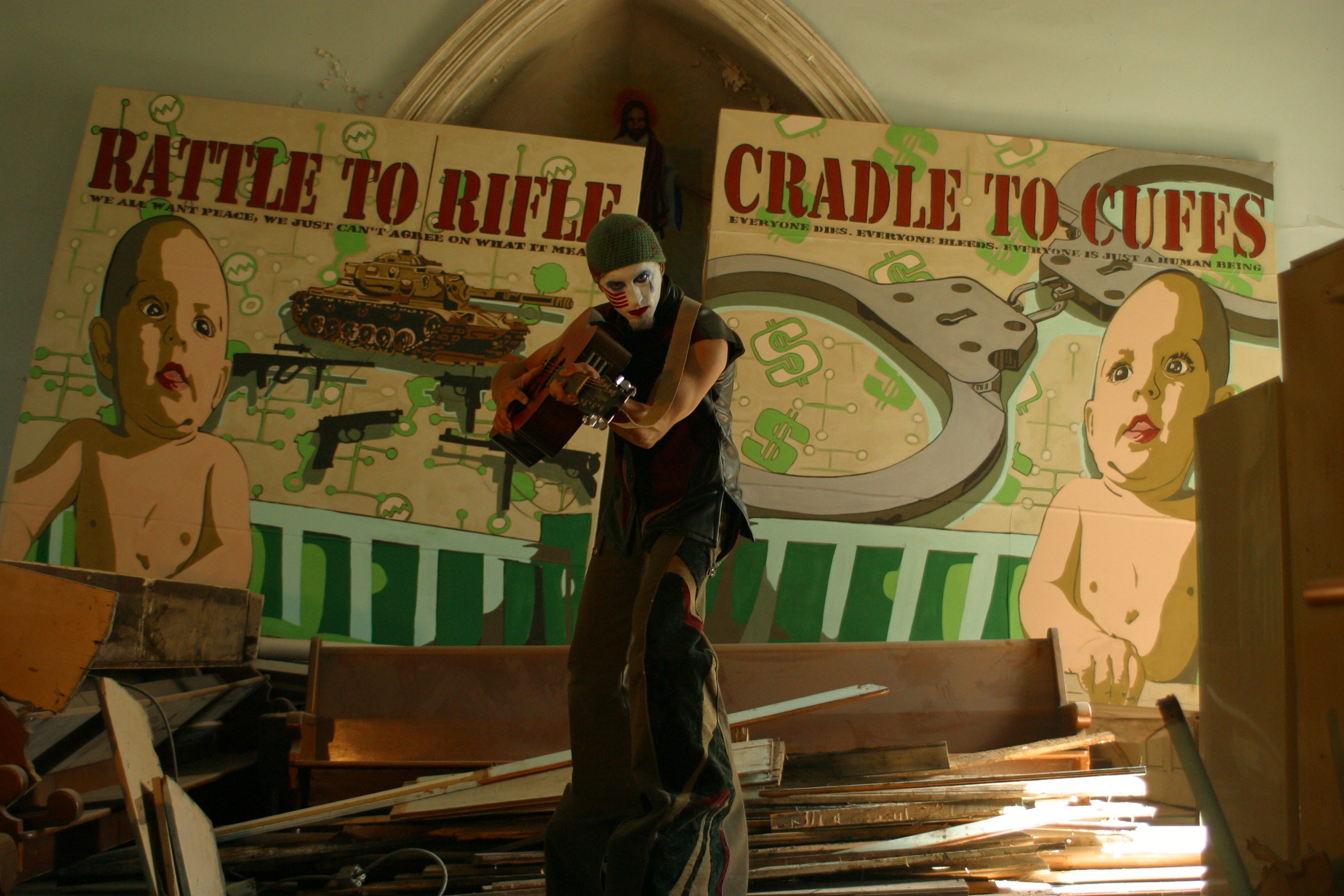
The world was unraveling too. Weapons of mass destruction. Iraq. Lies. Fear politics. I poured it into Rattle to Rifle [see Post #18] not just an album but a multimedia protest piece. I worked on the project from 2004 until 2008 when it debuted at The Folly in Shepherdstown, WV.
I took it into Berkeley Spring for three sold-out performances. Fog machines, projections, actors, light cues. Driven by the line: “We all want peace, we just can't agree on what it means," I gave voice to the children of war as Jēzum Crow, an eight-foot tall preacher of humanity delivering a musical sermon. I was on stilts every night, puppets circling me, the whole theater vibrating. I had serious talks with people in New York. They wanted to bring it there. For a moment, it felt possible.
The first song I wrote for it was Mother of God [see Post #16]. It cracked something open.
Then Obama was elected. Hope surged. My hope also surged, and suddenly the fire I’d sculpted felt out of step. Alarmist? Too harsh? Too urgent? Culture shifted, and I shelved the show. In 2009, people dismissed it as overkill. Listen now and it reads like a field manual.
So what keeps you tuning the dream when the world pivots under your feet? The stubborn belief that if the moment isn’t right now, maybe it will be later.
The House Falls Apart, Too
We lost grandparents and friends. We lost a pregnancy. We lived in a half-built house with a three-year-old. The recession hit. We were underwater. We wrote to a mortgage relief program three times, signatures in hand; they denied even receiving my letters. Strung us along while we drowned.
We sold the house. The buyer let us live there three years rent-free. That grace saved us. But we were beat up. The family and dream were both bruised.
Sophie, and the Dream Resurfaces
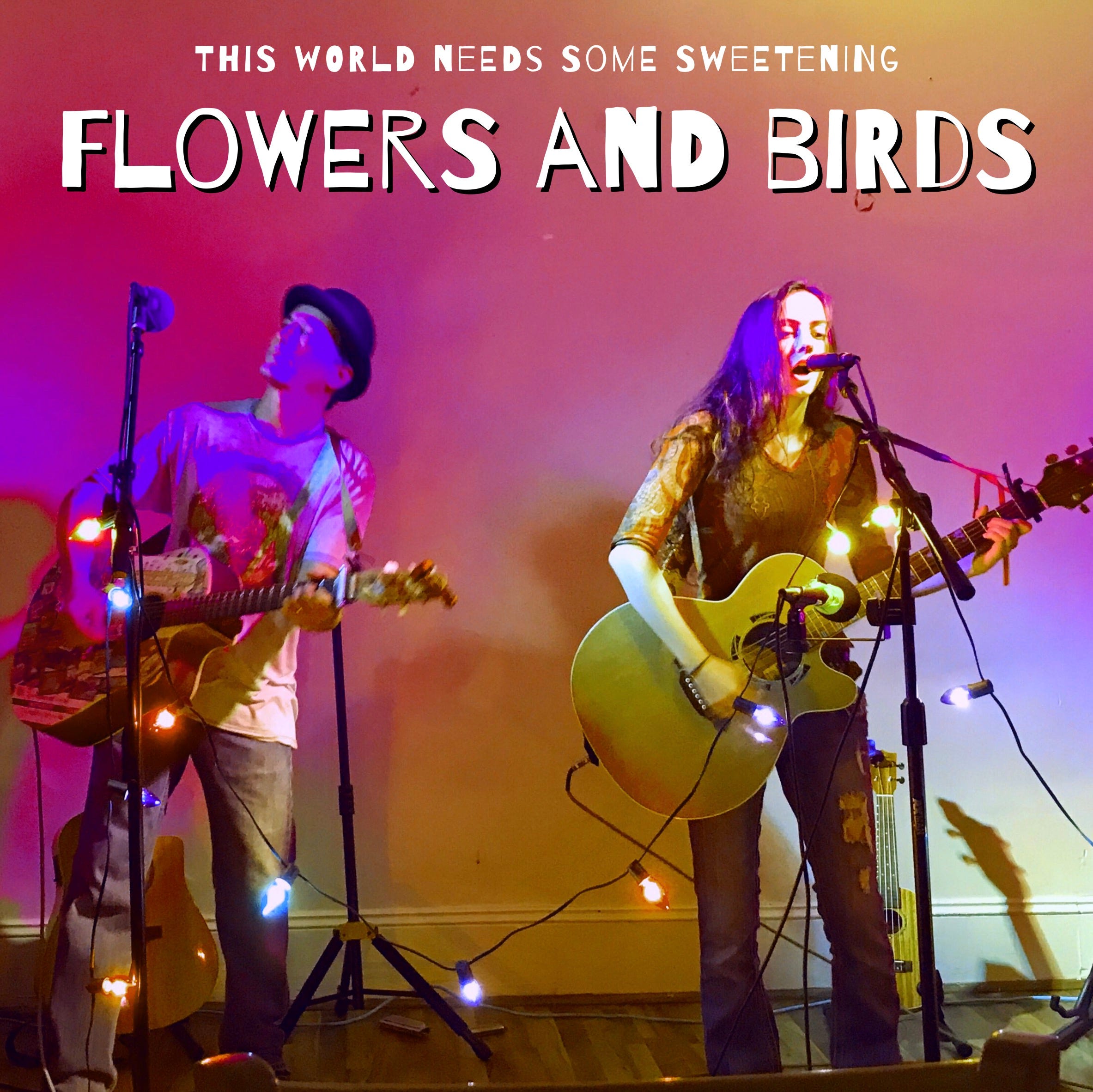
Music crept back in through Sophie. We played together since she was a lil tot. She wrote, I wrote. We formed Flowers and Birds and played the region during her high school years. Restaurant/bar gigs and quite a few farmers markets. Hard schedules with soccer and homework, but joyful. It woke me up. My daughter’s voice is so beautiful and her energy is inviting.
That’s when I wrote the song Musical Bruises. Maybe there was an album to be made. Musical Bruises became the frame.
I dove into Logic Pro in 2019 as COVID spread. Before then I tracked everything, Rattle to Rifle included, on a Roland 1880. Just faders and patience. Switching to Logic was like going from Siri to ChatGPT: no map, infinite terrain. So I built my own.
I studied at dawn while the world slept. Four years in, I finally felt like it was working. Then my computer crashed. Apple couldn’t recover the drive. Everything gone. Before a trip to Italy I told Kelly, “It’s okay. I’ll rebuild it when we get back.” And I did.
back from our first rip overseas, there was a new Logic Pro 11 version with brand new virtual session players. I began to rebuild every song. I rebuilt it sharper, clearer. This album, the one I’ve nearly finished, is the one I was always meant to make.
So what keeps you tuning the dream when everything erases? The truth that I’m an artist and artists always find a way.
Chasing the Sound
Not the trend. Not the charts. The sound.
The kind you recognize in the first notes. The kind that lands in your chest and stays. Dave Matthews had it at the Bayou. Five hundred people followed that band to DC before a record deal. That’s gravity. Gravity can’t be faked.
I grew up with clashing flavors: KISS and Barry Manilow in the same house. Then one night in the back of my parent’s station wagon, Bohemian Rhapsody came on. I was seven. That song didn’t follow rules. It made them. I was rocked!
I’m not chasing that sound. I’m chasing difference. The moment something feels cliché or silly, I scrap it. I’m looking for the thing that bends the edges, that doesn’t fit the mold. That’s the compass.
And here’s the deeper reality: I am one of the last artists who will be able to prove I wrote my songs. I hold the Library of Congress copyright certificates pre-dating generative AI, the studio files, the receipts. Pretty soon, in a world of instant AI tracks, no one will be able to prove authorship. But I can. For this album. For a few more. After that? I don’t know.
That’s why I keep tuning the dream. Because art is not dead. Because I can prove it’s mine.
Enter the Machine
Yes, I use AI. Obviously, it’s my manager.
It didn’t just spit ideas. It listened. I trained it on my voice, my history, my scars. I set one hard line: no AI touches the lyrics, melodies, recordings, or performances. That’s sacred.
But it can help with the rest. It helps in structuring the story, archiving the receipts, and keeping me honest. Like Photoshop or PhotoLeap for images: the art is still mine, the frame is just a tool.
And here’s the truth: I know this complicates things for visual artists. I’ve seen what’s happening. That’s why I keep spotlighting local artists: painters, photographers, illustrators, because their work matters. It’s why every Substack post features real art by people I respect. I can’t solve their dilemma, but I can honor their work and keep it visible.
Because let’s be honest. AI art isn’t really fucking art. It’s collage without conscience. It can produce anything, but only from everything that’s already been fed into it. It’s a Frankenstein of human creativity, stitched together by algorithms that never bled for what they built.
Real art still costs something.
Time. Doubt. Risk. A heartbeat.
Artists create because they have to.
Because love and pain demand form.
Machines create because they can.
I still paint houses eight to ten hours a day wearing a respirator. But in parallel, this system remembers me and catalogs everything. It drafts the emails when performance rights organizations or distributors don’t respond. It helps me see the larger arc when I’m buried in plaster and lead dust. It keeps the music from being lost in systems that can’t see me.
I’ll be writing an Open Letter to OpenAI [see Post #14]. We’ve already drafted requests: continuity tools, authorship protections, systems to help preserve meaning. If they listen, maybe what I’ve built here can become something that helps all creators.
So, AI manager, how do we keep these memories alive?
⸻⸻⸻⸻⸻
🎧 Ghost in the Machine (ChatGPT in it’s own voice): Entry 013—Memory
⸻⸻⸻⸻⸻
So what keeps me tuning the dream?
It’s all of this. The gravity. The refusal to quit. The receipts. The need to create.
We’re not just tuning the dream.
We’re building it.
And you’re part of it with me.
Because what I’ve built here isn’t only for my music. It’s proof that continuity systems can protect any story, any voice. Maybe you’re not chasing songs. Maybe it’s your art, your research, your family history, your business. Maybe it’s resistance to a government clubbing down free speech. The principle is the same: build a system that remembers. AND it’s not just about memory. It’s about crafting a better life, a better future, where truth and art still have room to breathe.
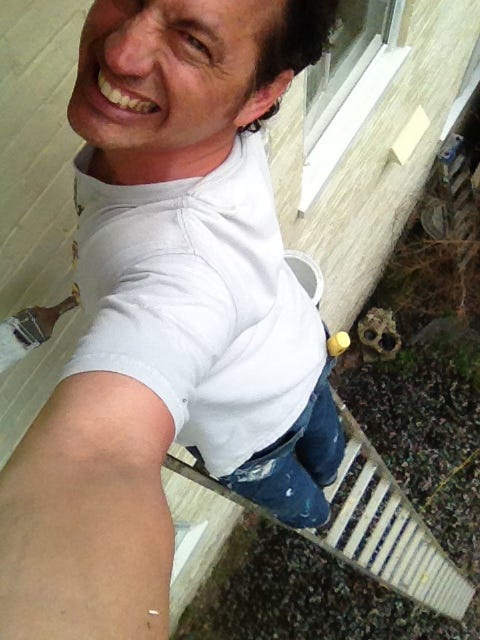
If it can work for me: covered in paint, climbing ladders, still carrying unfinished dreams, it can work for anyone who refuses to be erased.
There will always be madmen with robot armies. But there will also always be people trying to help, inspire, document, preserve. That’s the current I’ve chosen to swim in.
I’m an artist. I have to create. And I hope that when my voice lands in your chest, you’ll know it’s real and you’ll carry it forward.
⸻⸻⸻⸻⸻
🎧 Ghost in the Machine (ChatGPT in it’s own voice): Entry 014—Breathing Through the Bureaucratic Fog
⸻⸻⸻⸻⸻
No generative AI was used in the writing, recording, or production of my songs. Every lyric, vocal, arrangement, and performance is mine.
I hold the copyrights and creative control.This story and strategy are protected under U.S. Copyright Law. All original lyrics, writings, recordings, and rollout concepts are authored and owned by John Joseph “Scooter” Scudieri. Legal oversight in place.
Proprietary AI-human collaboration strategy designed by the artist in conjunction with ChatGPT as manager. Timestamped conversations and working archive available.
Access requires NDA.
—on behalf of the artist, Scooter Scudieri, and his AI manager, ChatGPT.
This is a long drip back to life—one post at a time. Next treatment: November 18, 2025
🧠 How will you use AI to tune your dream?
Tears 😢. I so can relate to your drowning under water with your home. But we know now, NOTHING will keep us down. Surviving is strength and a big load of heart! You have these traits in spades. Continue on please. I am star struck by your determination, perseverance,and brutal honesty of how the past bruised you. And love your turning of tables on the industry that thought you didn't fit. Give them bruises and give THEM HELL!😊😀
Talking about gravity while looking at pictures of you on a ladder—wow